William Wordsworth
Poet · Writer
1770–1850 · Born in Cockermouth, Cumberland, England · 4 min read
- Verified: 13 November 2026
- Sources: 5
- Independently reviewed
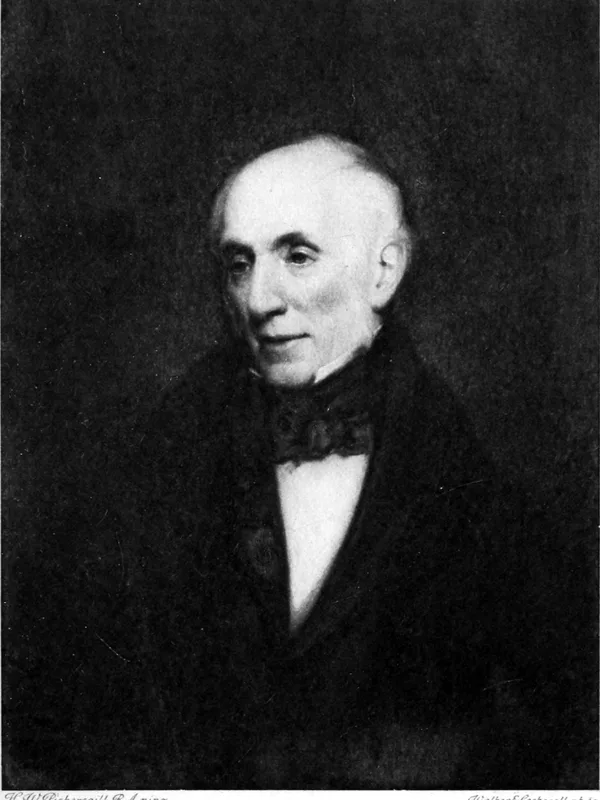

English poet who, with Samuel Taylor Coleridge, launched Romanticism with Lyrical Ballads (1798); author of 'Daffodils' and the autobiographical epic The Prelude.
Early Life
William Wordsworth was born on 7 April 1770 in Cockermouth, Cumberland, in the Lake District of northern England, the second of five children of John Wordsworth, an estate manager and lawyer, and Ann Cookson Wordsworth. His mother died in 1778, when he was seven, and his father died in December 1783, when he was thirteen. The children were separated: William and his brothers were sent to Hawkshead Grammar School, where the lakes and mountains of the district became the landscape of his imagination, while his sister Dorothy was sent to live with relatives in Halifax. In 1787 he went to St John's College, Cambridge, where he took an undistinguished pass degree. His most important act as an undergraduate was a long walking tour through revolutionary France in the summer of 1790, which made him an ardent republican sympathiser. He returned to France in 1791, fell in love with Annette Vallon, and their daughter Caroline was born in December 1792, before war between England and France cut him off from them.
Education
Wordsworth was educated at Hawkshead Grammar School in the Lake District and at St John's College, Cambridge, where he studied from 1787 and took a pass degree in 1791.
Career
Wordsworth's poetic career began with his walking tour of revolutionary France in 1790 and his first books, An Evening Walk and Descriptive Sketches (1793). After dark years of poverty and political disillusion in London, a friend's legacy in 1795 allowed him to settle with his sister Dorothy, first at Racedown and then at Alfoxden House near Bristol, where he met Coleridge in 1797. Their partnership produced Lyrical Ballads (1798), published anonymously, and its second edition of 1800 with Wordsworth's famous Preface. In 1799 he settled with Dorothy at Dove Cottage in Grasmere, and in 1802 he married Mary Hutchinson. The years to 1808 were his most productive; afterwards he wrote less new poetry of the same power, publishing Poems, in Two Volumes (1807) and The Excursion (1814). From 1813 he held the paid office of Distributor of Stamps for Westmorland, which gave him financial security. In 1843 he succeeded Robert Southey as Poet Laureate, and he died at Rydal Mount in 1850, three months before his widow Mary published The Prelude.
Achievements
Wordsworth's achievement was to change what English poetry could be about and how it could sound. Lyrical Ballads (1798), written with Samuel Taylor Coleridge, opened the Romantic age, and the Preface to its second edition (1800) argued that poetry should take its subjects from common life and use the language really used by men — a programme that foreshadowed much of twentieth-century poetry. His greatest poems came in the 'great decade' of 1797–1808: 'Tintern Abbey', 'I Wandered Lonely as a Cloud', 'The Solitary Reaper', 'Resolution and Independence' and the 'Ode: Intimations of Immortality'. His long autobiographical poem The Prelude, begun in 1798 and completed in 1805, was revised for the rest of his life and published only after his death; it is now regarded as his masterpiece. He ended his life as the most honoured poet in Britain, Poet Laureate from 1843 until his death.
- Published Lyrical Ballads (1798) with Samuel Taylor Coleridge, the book that launched the English Romantic movement
- Wrote the Preface to the second edition of Lyrical Ballads (1800), the manifesto of Romantic poetry
- Wrote 'Lines Composed a Few Miles Above Tintern Abbey' (1798), 'I Wandered Lonely as a Cloud' (1807) and 'Ode: Intimations of Immortality' (1807)
- Completed The Prelude in 1805, the long autobiographical poem published after his death and now regarded as his masterpiece
- Served as Poet Laureate of Britain from 1843 until his death in 1850
- Served as Distributor of Stamps for Westmorland from 1813, which gave him financial security
- His poetry changed English verse, replacing formal Neoclassical diction with the language of ordinary people
Legacy
Wordsworth died of pleurisy at Rydal Mount on 23 April 1850, aged 80, and was buried in the churchyard of St Oswald's Church at Grasmere. His reputation was already secure: he had been the most respected poet in Britain for decades, and The Prelude, published three months after his death, confirmed him as the central English poet between Milton and the moderns. His idea that poetry is 'the spontaneous overflow of powerful feelings' recollected in tranquillity, and that it should speak in ordinary language about ordinary lives, reshaped English verse and influenced the Victorians, the modernists and every nature poet since. Dove Cottage at Grasmere, where he lived with Dorothy from 1799 to 1808, is preserved as a museum, and the Lake District he celebrated remains inseparable from his name.
Contributions
Wordsworth's contribution was to democratise English poetry. Before Lyrical Ballads, serious verse spoke in elevated diction about great subjects; Wordsworth insisted that incidents from common life — a leech-gatherer, a solitary reaper, a ruined cottage, a field of daffodils — were fit subjects for poetry, and that the language of ordinary people was fit to carry them. His Preface of 1800 is the founding document of Romantic poetics, and his practice proved it: poems built on memory, nature and feeling rather than on classical allusion. He also made the Lake District a literary landscape, and his long meditation on the growth of his own mind in The Prelude invented the modern autobiographical poem.
Notable Works
- Lyrical Ballads (1798, with Samuel Taylor Coleridge)
- Preface to Lyrical Ballads (1800)
- 'Lines Composed a Few Miles Above Tintern Abbey' (1798)
- 'I Wandered Lonely as a Cloud' (1807)
- 'Ode: Intimations of Immortality' (1807)
- 'The Solitary Reaper' (1807)
- 'Resolution and Independence' (1807)
- Poems, in Two Volumes (1807)
- The Excursion (1814)
- The Prelude (1850, published posthumously)
Milestones
- 1770 — Born in Cockermouth, Cumberland Source: Encyclopaedia Britannica
- 1787 — Goes to St John's College, Cambridge Source: Encyclopaedia Britannica
- 1790 — Walking tour through revolutionary France Source: Encyclopaedia Britannica
- 1793 — Publishes An Evening Walk and Descriptive Sketches Source: Poetry Foundation
- 1795 — Settles with his sister Dorothy at Racedown Source: Encyclopaedia Britannica
- 1797 — Meets Samuel Taylor Coleridge at Alfoxden Source: Encyclopaedia Britannica
- 1798 — Lyrical Ballads published with Coleridge Source: Encyclopaedia Britannica
- 1799 — Settles at Dove Cottage, Grasmere Source: Encyclopaedia Britannica
- 1802 — Marries Mary Hutchinson Source: Encyclopaedia Britannica
- 1805 — Completes The Prelude Source: Encyclopaedia Britannica
- 1807 — Publishes Poems, in Two Volumes, including 'I Wandered Lonely as a Cloud' Source: Encyclopaedia Britannica
- 1813 — Becomes Distributor of Stamps for Westmorland Source: Zigzag Education
- 1843 — Becomes Poet Laureate, succeeding Robert Southey Source: Encyclopaedia Britannica
- 1850 — Dies at Rydal Mount; The Prelude is published posthumously Source: Encyclopaedia Britannica
Timeline
- 7 April 1770
Born in Cockermouth, Cumberland, the second of five children
Source: Encyclopaedia Britannica; Poetry Foundation - 1778
His mother, Ann Wordsworth, dies; his sister Dorothy is sent to live with relatives in Halifax
Year only — exact date unknown Source: Encyclopaedia Britannica; Poetry Foundation - 1783-12
His father, John Wordsworth, dies; the boys are sent to Hawkshead Grammar School
Approximate date Source: Encyclopaedia Britannica; Poetry Foundation - 1787
Goes to St John's College, Cambridge
Year only — exact date unknown Source: Encyclopaedia Britannica; Poetry Foundation - 1790
Walking tour through revolutionary France with Robert Jones
Year only — exact date unknown Source: Encyclopaedia Britannica; Poetry Foundation - 1792-12
His daughter Caroline is born in France to Annette Vallon; war cuts him off from them
Approximate date Source: Encyclopaedia Britannica - 1795
A friend's legacy allows him to settle with his sister Dorothy at Racedown
Year only — exact date unknown Source: Encyclopaedia Britannica - 1797
Moves to Alfoxden House near Bristol and meets Samuel Taylor Coleridge
Year only — exact date unknown Source: Encyclopaedia Britannica; Poetry Foundation - 1798
Lyrical Ballads is published anonymously with Coleridge; he begins The Prelude
Year only — exact date unknown Source: Encyclopaedia Britannica; Poetry Foundation - 1799
Settles with Dorothy at Dove Cottage, Grasmere
Year only — exact date unknown Source: Encyclopaedia Britannica - 1802
Marries Mary Hutchinson; his father's inheritance is finally settled
Year only — exact date unknown Source: Encyclopaedia Britannica - 1805
Completes The Prelude, which he will revise for the rest of his life without publishing it
Year only — exact date unknown Source: Encyclopaedia Britannica; Poetry Foundation - 1813
Becomes Distributor of Stamps for Westmorland, gaining financial security
Year only — exact date unknown Source: Zigzag Education; Wikipedia (William Wordsworth) - 1843
Succeeds Robert Southey as Poet Laureate
Year only — exact date unknown Source: Encyclopaedia Britannica - 23 April 1850
Dies of pleurisy at Rydal Mount, aged 80
Source: Encyclopaedia Britannica
Related Personalities
Frequently Asked Questions
Who was William Wordsworth?
William Wordsworth (1770–1850) was an English poet who, with Samuel Taylor Coleridge, launched the Romantic movement in English literature with Lyrical Ballads (1798). His poetry of nature, memory and ordinary life, and his long autobiographical poem The Prelude, made him the central English poet of his age.
Source: Encyclopaedia Britannica ; Poetry FoundationWhat is Lyrical Ballads?
Lyrical Ballads, published anonymously in 1798, is the joint collection by Wordsworth and Samuel Taylor Coleridge that opened the Romantic age in English poetry. Its preface, added to the second edition in 1800, argued that poetry should use the language of ordinary people and take its subjects from common life.
Source: Encyclopaedia Britannica ; Poetry FoundationWhat is 'I Wandered Lonely as a Cloud' about?
'I Wandered Lonely as a Cloud', often called 'Daffodils', describes a walk beside Ullswater in the Lake District where the poet sees a host of golden daffodils. Composed in 1804 and published in 1807, it turns a remembered moment of joy in nature into a lasting source of comfort in solitude.
Source: Encyclopaedia Britannica ; Poetry FoundationWhat is The Prelude?
The Prelude is Wordsworth's long autobiographical poem in blank verse, subtitled 'Growth of a Poet's Mind', tracing his childhood, education and growth as a poet. Begun in 1798 and completed in 1805, he revised it for the rest of his life, and his widow Mary published it in 1850, three months after his death.
Source: Encyclopaedia Britannica ; Poetry FoundationWhen did Wordsworth become Poet Laureate?
Wordsworth became Poet Laureate in 1843, succeeding Robert Southey, and held the office until his death in 1850. He accepted only after being assured that no official verses would be required of him, and he remains the only Poet Laureate who wrote no official laureate poems.
Source: Encyclopaedia Britannica ; Zigzag EducationHow did Wordsworth die?
Wordsworth died of pleurisy at Rydal Mount, his home near Ambleside in the Lake District, on 23 April 1850, at the age of eighty. He was buried in the churchyard of St Oswald's Church at Grasmere, close to the village where he had lived with his sister Dorothy at Dove Cottage.
Source: Encyclopaedia Britannica ; Encyclopaedia Britannica, 11th editionSources & References
- William Wordsworth | Famous Poems, Books, Biography, Daffodils, Lucy, & Facts — Encyclopaedia Britannica (accessed 13 November 2026)
- William Wordsworth — Poetry Foundation (accessed 13 November 2026)
- William Wordsworth — Wikipedia (accessed 13 November 2026)
- Wordsworth, William | Mini-Bios — Zigzag Education (accessed 13 November 2026)
- File:William Wordsworth Portrait by H. W. Pickersgill.jpg — Wikimedia Commons (portrait file page) — Wikimedia Commons (accessed 13 November 2026)
Explore More
- More Writers & Authors
- Personalities from United Kingdom
- More poets
- More writers
- Famous people born in April
- Browse all personalities
Featured on these lists: